

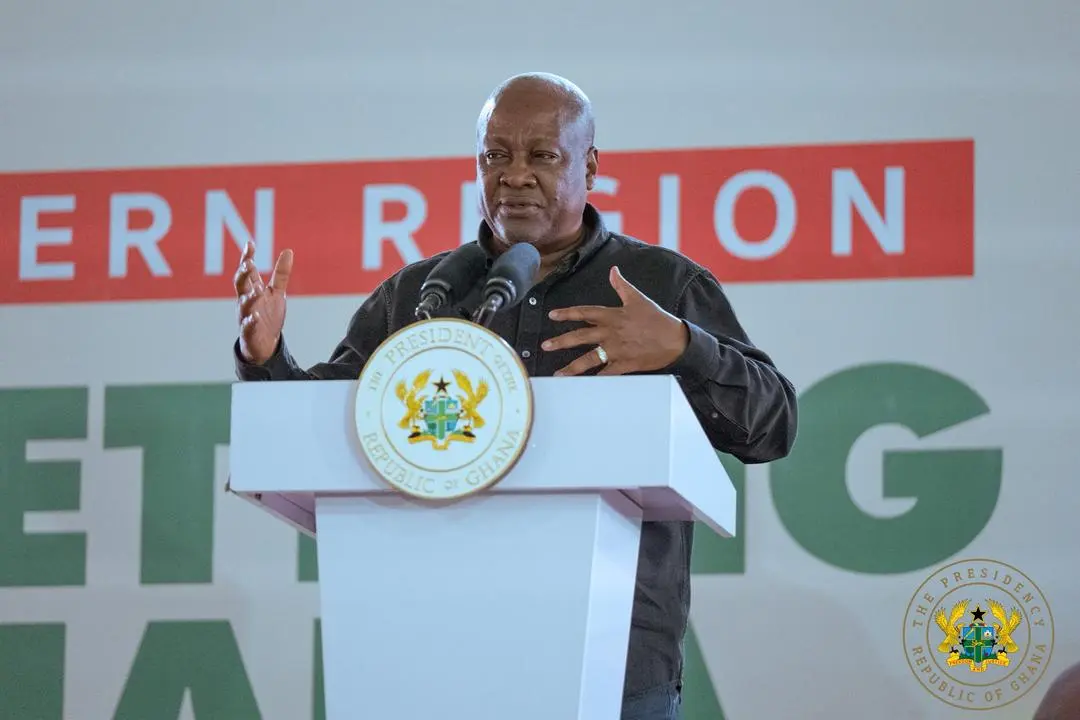
President John Dramani Mahama has cautioned against political and traditional interference in disciplinary processes within Ghana’s public sector, warning that such practices weaken institutions and undermine accountability.
Speaking at the #ResettingGhana Citizen’s Engagement in Tamale, as part of his two+day Resetting Ghana tour of the Northern Region, the President said the growing tendency for individuals sanctioned for misconduct to seek intervention from influential persons to reverse disciplinary actions is eroding the culture of accountability in public institutions.
He stressed that a disciplined public sector is critical to effective governance and service delivery, adding that when established procedures are compromised through external influence, institutional integrity is severely weakened.
President Mahama noted that public institutions must be allowed to apply their rules without fear or favour, emphasising that enforcement of discipline is essential to restoring public trust and improving efficiency within the civil service.


He further indicated that government remains committed to strengthening systems that promote transparency and accountability, while ensuring that due process is upheld in all disciplinary matters.
By : Celestine Avi and Seth Eyiah


