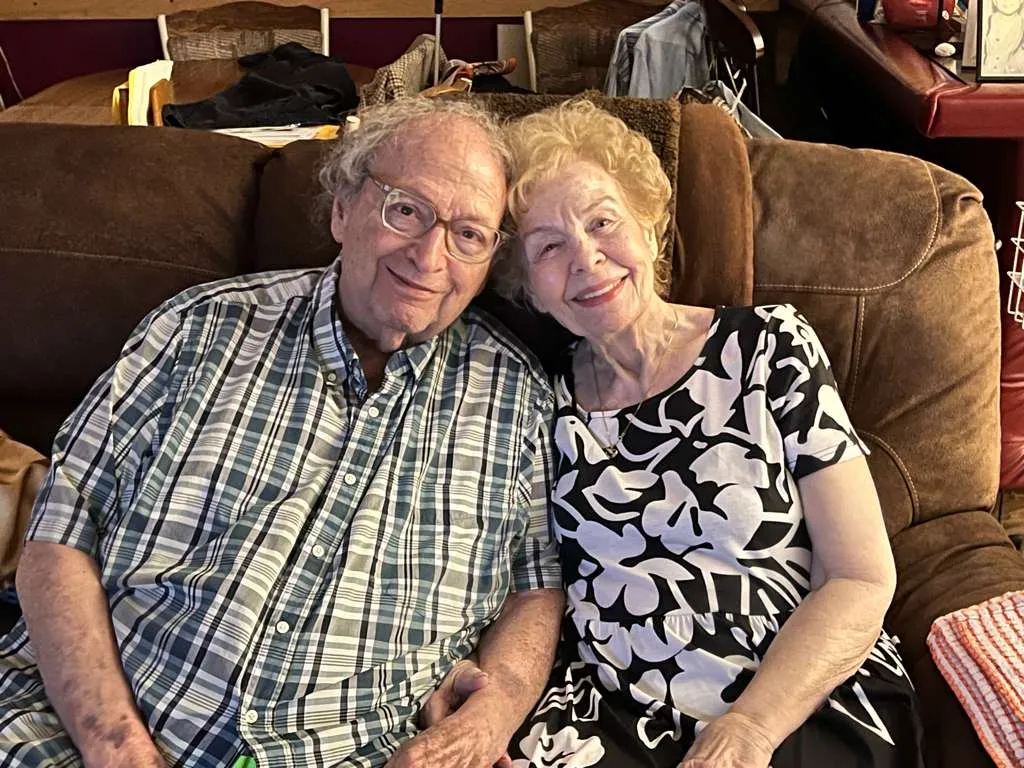
Bill Caplan, the International Boxing Hall of Fame publicist whose career spanned from George Foreman and Oscar De La Hoya to Manny Pacquiao and Canelo Alvarez, died at age 90 Thursday.
Caplan, after entering the sport in 1962, publicized fights for promoters Bob Arum, Don King, De La Hoya and fellow Hall of Famers Dan Goossen, Aileen Eaton and Don Chargin.
The jolly, renown storyteller with a gift for being the ideal conduit for fight authorities looking to protect certain details of the news and reporters thirsting for all the salty facts, Caplan was born September 8, 1935, in Des Moines, Iowa, and resided for more than 70 years in Los Angeles County.
He’s survived by his wife of 69 years, Sandy, longtime boxing publicist daughter, Debbie, daughter Liz, son Scott, nine grandchildren and one great-grandchild. Sons Harold and Charles preceded him in death.
Caplan is most associated with former two-time heavyweight champion George Foreman from his amateur career in Oakland to the famed “Rumble in the Jungle” in Africa to his stirring comeback to stand again as heavyweight champion by knocking out Michael Moorer in 1994.
Yet, it was Caplan’s chance run-in with Foreman’s 1974 foe Muhammad Ali that most seriously shaped his publicity career.
It was in 1962, when Olympic gold medalist Ali fought three times that year at the Los Angeles Sports Arena, that Caplan entered the downtown Main Street Gym with a new transistor radio glued to his ear, listening to Vin Scully call the action for Caplan’s beloved Los Angeles Dodgers.
Soon enough, Caplan was standing near the ring, piqueing Ali’s curiosity over this contraption.
“What have you got there?” Ali asked Caplan.
“A transistor radio,” Caplan responded.
“Does it play music?” Ali queried, with Caplan answering yes.
“Could I record some songs off that with a device I have back in my room?” Ali wondered.
“I imagine you can,” said Caplan.
After the workout, the pair retreated to Ali’s room and as the future three-time heavyweight champion began recording random songs from the AM radio that he planned to listen to at a later time, he asked Caplan, “What is it again that you do?”
“I’m a boxing publicist,” Caplan answered.
“Publicity? You want to know about publicity?” Ali asked Caplan, proceeding to grab a huge binder from his closet that contained newspaper clips, magazine cover stories and books all written about the man who would ultimately be known as “The Greatest.”
Caplan learned right there the importance of getting the athlete he represented to talk, and to present the athlete and their story to the right people for maximum reach.
His other tenet was to create unique themes for the fights, and to ensure news-conference venues offered great food to ensure a large turnout of reporters.
“Our motto was: ‘Good food, good turnout.’ All of his best friends were journalists,” Debbie Caplan told BoxingScene Friday.
Bill Caplan would ultimately strike strong working relationships with the key writers at his hometown Los Angeles Times and Los Angeles Herald-Examiner, mostly his longtime best friend Allan Malamud and Pulitzer Prize-winning columnist Jim Murray.
Caplan was proud that Murray never declined a story pitch, including one the publicist made for Eric “Butterbean” Esch, the so-called “King of the four-rounders.”
Murray wondered in the first place why he should devote such prime newspaper real estate to a four-round fighter, but he soon found out by interviewing “Butterbean,” and watching his highlights.
Murray, in his unique style, wrote “Butterbean” “was so white, you could read by him,” and described his body above massive red, white and blue trunks as “a bowl of whipped cream.”
Caplan extended the selfless (and selfish) courtesy of driving the vision-impaired Murray to various news conferences and events, and he also spent hours with the well-connected Malamud.
In one conflicted event, Malamud excitedly told Caplan he was breaking the news that Manager Tommy Lasorda would be stepping down from the Dodgers.
“Oh no, that’s terrible news!” Caplan told Malamud, who bemoaned, “Can’t you be happy for me?”
Caplan’s love of the Dodgers was so profound he attended both the team’s debut games at the Los Angeles Memorial Coliseum and at Dodger Stadium, and his family took great comfort in the joy he gained by watching their past two World Series victories, with daughter Liz joining him bedside over the past month to watch each Dodgers’ game.
Caplan once proudly told me, he and Malamud were both “D” men, and, frankly, I didn’t want to hear anymore.
“The ‘D’ stands for dessert,” clarified the rotund Caplan, nicknamed “Bozo” by the outstanding Long Beach Press-Telegram sports columnist Doug Krikorian during the height of the sport.
Caplan told one story about both he and Malamud buying their own full peach pie at Marie Callender’s, driving to Caplan’s home and parking in the darkened garage, stopping from bringing the delicious delights inside the family packed home to scarf the pies by hand while seated in the vehicle.
About 10 minutes into the eating session, Sandy Caplan entered the garage, hit the lights and exclaimed to the sneaky pair, “Busted!”
Malamud, upon taking over the prized Page 2 “Notes on a Scorecard” column at The Times, was sitting in his downtown apartment one horribly rainy day and called Caplan, in his home more than 30 miles away, to proclaim, “You know what I feel like?”
Caplan asked what.
“A chocolate cream pie,” Malamud answered, admitting the rain was torturous, but telling Caplan he’d pay him $50 for his troubles of driving one over.
Caplan endured the trek, sloshing through multiple L.A. freeways and hiking up the stairs to see a door opened to Malamud’s apartment with an extended hand holding a $50 bill protruding out of it.
“Can I come inside?” Caplan asked, winning Malamud’s approval, and hoping for a slice himself by generously cutting the pie into four substantial portions and serving his friend as if he were a waiter.
Malamud ate the first slice with ease, but began to slow during the second piece, groaning a bit and pausing before digging into the third.
Suddenly disgusted by the gluttony, Malamud stood from his chair, grabbed the pie box carrying the final two slices and raced down his hallway, dumping the rest of the pie down the garbage chute.
“Allan! Why?!” Caplan roared.
In later years, following Malamud’s death and working with a new generation of reporters, Caplan’s love of “boxing-family” fight-week dinners was profound.
The sessions were often hosted by a client who called him “Uncle Bill,” WBC President Mauricio Sulaiman, whom Caplan took to Disneyland as a child when Sulaiman’s late father, Jose, was president of the sanctioning body.
During those dinners, Caplan informed me and fellow writers Dan Rafael, Norm Frauenheim and Arash Markazi that dessert with ice cream was an essential part of the meal because it served as a “greasecutter” to the digestive process.
That culinary wisdom was topped by Caplan’s remarkable bank of boxing tales.
He was King’s first publicist, and during one promotional campaign, Caplan found himself in King’s hotel room. The boisterous King formerly combed his hair as most men do, but on that occasion, he picked it skyward in that indomitable style that makes it look like he stuck his finger in a light socket.
“My wife hates when I do this, but what do you think?” King asked Caplan.
“Well, people will definitely remember you,” Caplan advised.
The rest is history.
Caplan’s gift for pitching stories was rooted in charm, friendship and feigned desperation with an implication that the respective promoter he was working with might not keep him around if the given writer didn’t show up.
At cross-promoted shows with other publicists involved, Hall of Fame publicist Fred Sternburg said he would routinely inspect the media section and conclude, “Every big name was there because of Bill.”
Caplan’s desire for maximum coverage by the mainstream and boxing publications was seen in the 1980s when Mexico’s bantamweight champion Lupe Pintor arrived at a news conference at a Southern California restaurant.
The opponent was late to the event, so after Pintor gave some interviews, he was ready to leave. Caplan begged him to stay for face-off photos with the foe. Pintor, who drove himself to the event in a full-size sedan, said it was rude of the opponent, and he was going to take off.
Caplan pleaded and the menace-faced Pintor walked, getting behind the wheel and starting his car as Caplan followed and positioned himself in front of it, lying down on the parking lot asphalt, his head in front of Pintor’s vehicle’s left tire.
The car moved forward. Caplan peered at the rolling tire and looked up desperately, locking eyes with Pintor, who broke down in laughter before stopping the car and exiting the vehicle.
Minutes later, the opponent showed and the full news conference had taken place.
“He was a character,” Arum recalled upon learning of Caplan’s death.
Caplan’s most treasured fighter connections were with Foreman and De La Hoya, whom he long praised for their charitable endeavors.
In his autobiography, Foreman wrote he would have quit boxing after an amateur loss if he hadn’t been comforted by a “celebrity” in the minutes after the defeat as he sat alone on a rubbing table.
“Don’t worry, George. You’re going to be a great fighter someday,” the man in a tuxedo said, patting Foreman on the back.
Foreman said he was so inspired by the words because he believed the man was the owner of the arena.
It was actually Caplan, donning the tuxedo only because he was the ring announcer that night.
The pair struck a lifelong working relationship that took Caplan to Africa for the Ali fight and countless Ping-Pong matches with Foreman there after the dominant champion suffered a fight-postponing cut in sparring.
Shattered by the loss to Ali, Foreman would leave the sport a few years later, but then in the 1990s, Caplan read a news brief in the L.A. Times that Foreman had resumed training and immediately boarded a flight to Houston with daughter Debbie to knock on Foreman’s front door.
Debbie Caplan said the scene was unforgettable – Foreman appearing bald and seemingly pushing 400lbs, wearing farmer overalls atop a plaid shirt.
“Bill, where have you been? I’ve been expecting you,” Foreman said upon answering.
Caplan and his good friends Don and Lorraine Chargin got Foreman licensed to fight in Sacramento, California, in 1985, and all of the major news agencies from across the U.S. overloaded press row, even though the slow Foreman was fighting “a tomato can,” as Debbie Caplan put it.
Fittingly, Bill Caplan arranged Foreman’s final extended interview with BoxingScene before the champion’s death last year, discussing his decision to sell his massive collection of vehicles.
Caplan’s hometown connection to the widely circulated L.A. Times was a mutually beneficial relationship, and Caplan had close ties with former Sports Editor Bill Dwyre, my predecessor as boxing writer, Steve Springer, and myself.
One of my first meetings with Caplan was him pitching that we cover a card topped by U.S. Olympian Vanes Martisrosyan at the Alameda Swap Meet.
He took Dwyre and I to lunch, and brought a fight poster.
Walking back to the office, the unimpressed Dwyre told me, “We don’t need to cover everything he asks for.”
Knowing that Caplan had been close to the legendary Murray and Malamud, that he was tight with De La Hoya and Arum, I knew I needed to report to that swap meet.
As we sat ringside in flimsy, white plastic chairs, rain started falling on us and Caplan excused himself for a few minutes to go chat with someone.
When he left, a tattooed fan sitting behind us grabbed away Caplan’s chair for a friend.
When Caplan returned, I turned to the imposing man and said, “Excuse me, we need that chair back. It belongs to this man, and he’s in charge of the fights.”
Back came the chair.
For years, Caplan would re-tell this story – to Dwyre, to fellow writers and others in the sport – inflating it by saying I stared down this gang member to retrieve Caplan’s seat.
If he could do that to boost a writer’s reputation, you understand fully what Bill Caplan did to lift all the boxers he worked with to heroic stature.