
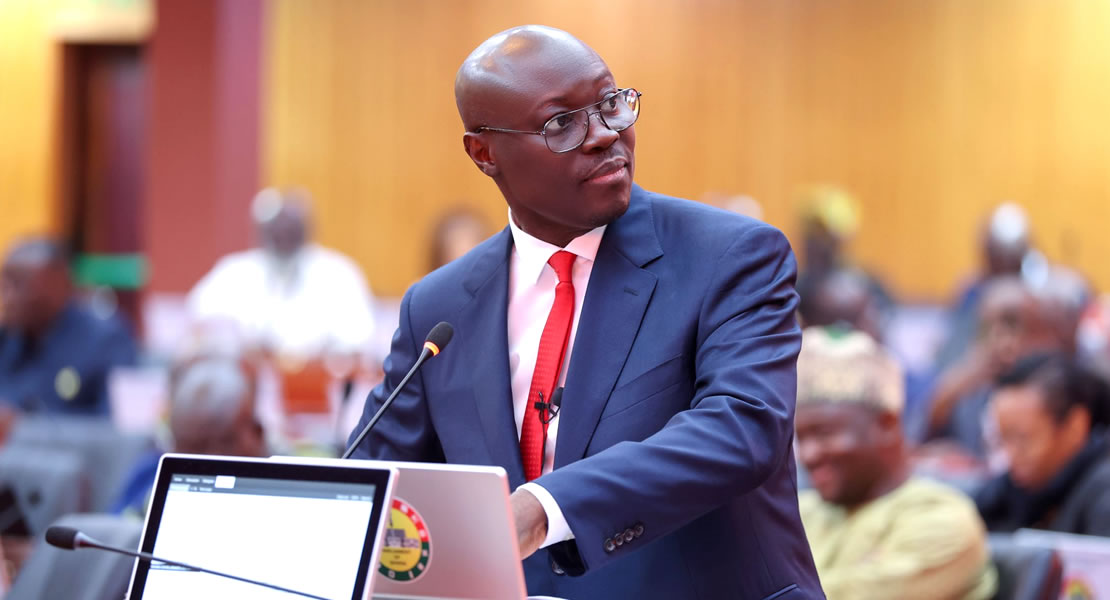
Ghana is targeting an investment-grade credit rating under its New Economy programme, with Finance Minister Dr Cassiel Ato Forson saying the achievement would lower borrowing costs and expand access to long-term financing for local businesses.
Speaking at a New Economy engagement in Accra, Dr Forson said the government was working to strengthen the country’s economic fundamentals, rebuild investor confidence and enhance its position in international financial markets.
He recalled that Ghana’s domestic bond market experienced a major disruption in 2022 following the country’s debt default and the introduction of the Domestic Debt Exchange Programme (DDEP).
The Finance Minister said the crisis affected credit lines available to local banks and brought much of the activity in the domestic bond market to an almost complete halt.
Dr Forson said the government had made strides in rebuilding investor confidence, noting that Ghana’s credit rating had improved to B. He stressed, however, that the broader goal remained to secure an investment-grade rating.
“Now we have restored it, and the country is now rated B. We want to get to investment grade,” he said.
An investment-grade rating would signal greater confidence in Ghana’s ability to meet its debt obligations and potentially attract a wider range of institutional investors, particularly those whose investment policies require a minimum credit rating.
Dr Forson said attaining the status could help the government borrow at lower interest rates by expanding the number of investors willing to buy its bonds.
He also pointed to the benefits for the private sector, noting that an improved sovereign credit rating could create better financing conditions for Ghanaian businesses and make access to credit more affordable.
He noted that an improved credit profile could also stimulate the development of Ghana’s corporate bond market, providing businesses with additional avenues to secure long-term funding beyond traditional bank loans.
According to him, this would enable companies to mobilise capital for expansion, purchase equipment, boost production capacity and finance new investment projects.
“If we are able to get to investment grade, we would have laid the foundation for corporate bonds and others to take off,” Dr Forson said.
He emphasised that attaining the target would depend on maintaining economic stability, ensuring policy consistency and sustaining the pace of reforms.
He said an investment-grade rating would go beyond strengthening Ghana’s credit profile, creating a more favourable financial environment for the government and private sector to secure affordable, long-term financing.