The village of Kwashikumaman was founded approximately a century ago by the late Nii Kwashikuma, a man of Fante origin whose legacy continues to shape the identity of the community today. As part of the Fante ethnic group, the people of Kwashikumaman trace their ancestral roots to Enyaa Abaasan in the Central Region of Ghana, from where Nii Kwashikuma migrated.
Nii Kwashikuma had three wives: Naa Ama Adua, Naa Ayele, and Naa Anowah. Among them, Naa Ama Adua played a particularly significant role in establishing the family’s presence beyond the village. Following the death of Nii Kwashikuma, she acquired a house in James Town, which became the family’s primary residence. This house is recognized today as the first of the three ruling houses of Kwashikumaman.
As a Fante-descended community, Kwashikumaman follows a matrilineal system of inheritance, where lineage and succession are traced through the mother’s line. This cultural framework distinguishes the community and reinforces the importance of maternal ancestry in leadership and family structure.
In terms of tradition, the people of Kwashikumaman do not celebrate Homowo, which is widely observed among the Ga people. Instead, they celebrate the Ahobaa Festival, held two weeks after the Ga people lift the customary ban on noise-making and drumming. This celebration reflects their unique heritage and cultural identity.
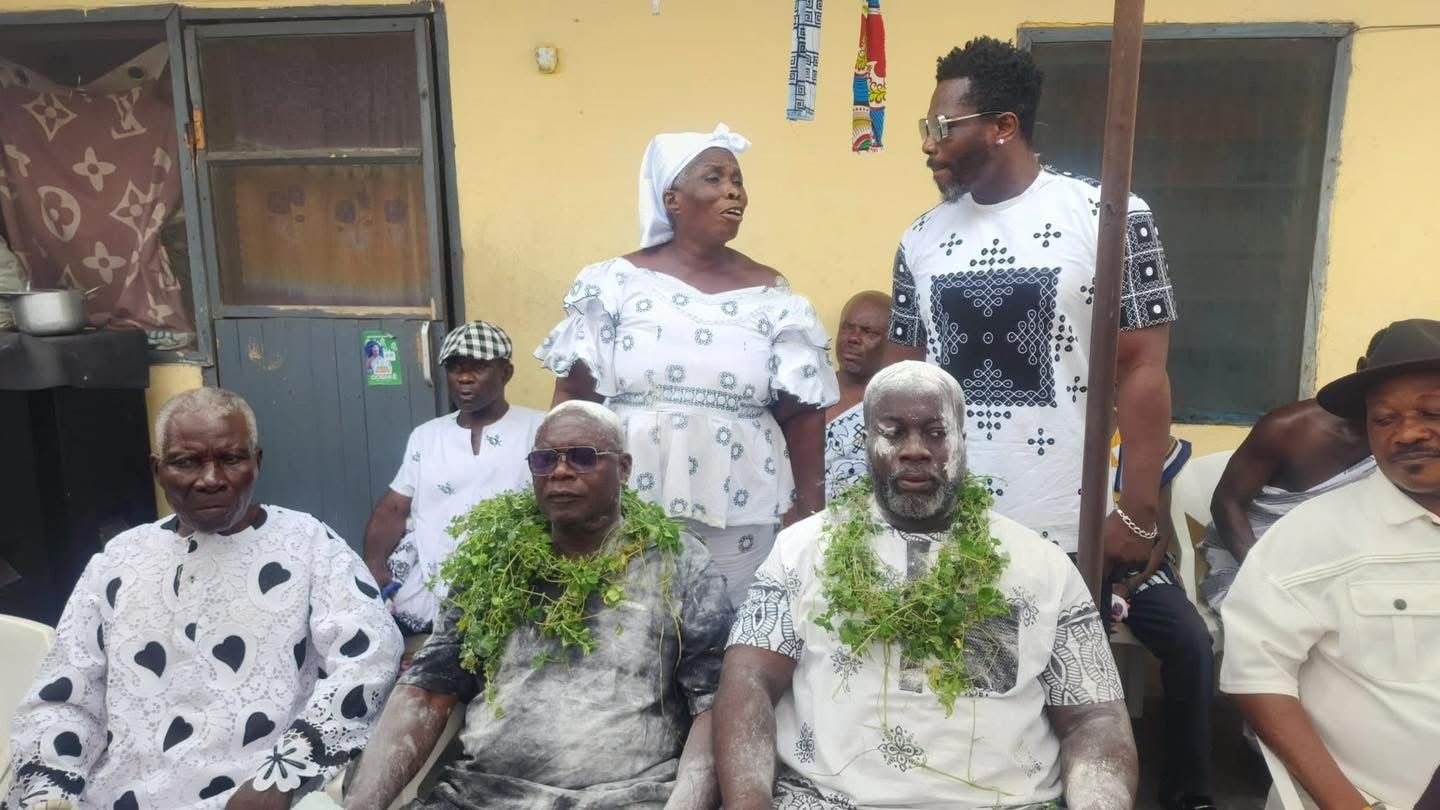
Nii Kwashikuma and Naa Ama Adua had two children: Naa Abrima and Kojo Guamah. The lineage of Naa Abrima continues to play a vital role in the family’s leadership. A present-day descendant of Naa Abrima holds the title of Abrahene, meaning the youth chief of the Naa Abrima family. This role carries significant responsibility, including managing the day-to-day affairs of the family in the absence of the family head and assisting in various traditional functions.
The title Abrahene, known in the Ga language as “Oblahii Mantse,” symbolizes leadership, service, and continuity within the lineage. It represents not only authority but also a commitment to preserving the traditions and values passed down from Nii Kwashikuma.
Through its rich history, matrilineal heritage, and enduring leadership structure, Kwashikumaman remains a vibrant community deeply rooted in tradition while continuing to evolve across generations.