Finance Minister Dr Cassiel Ato Forson has defended the Ghana Accelerated National Reserve Accumulation Policy (GANRAP), arguing that the country’s past strategy of building foreign reserves through borrowing and short-term financial instruments came at an unsustainable cost.
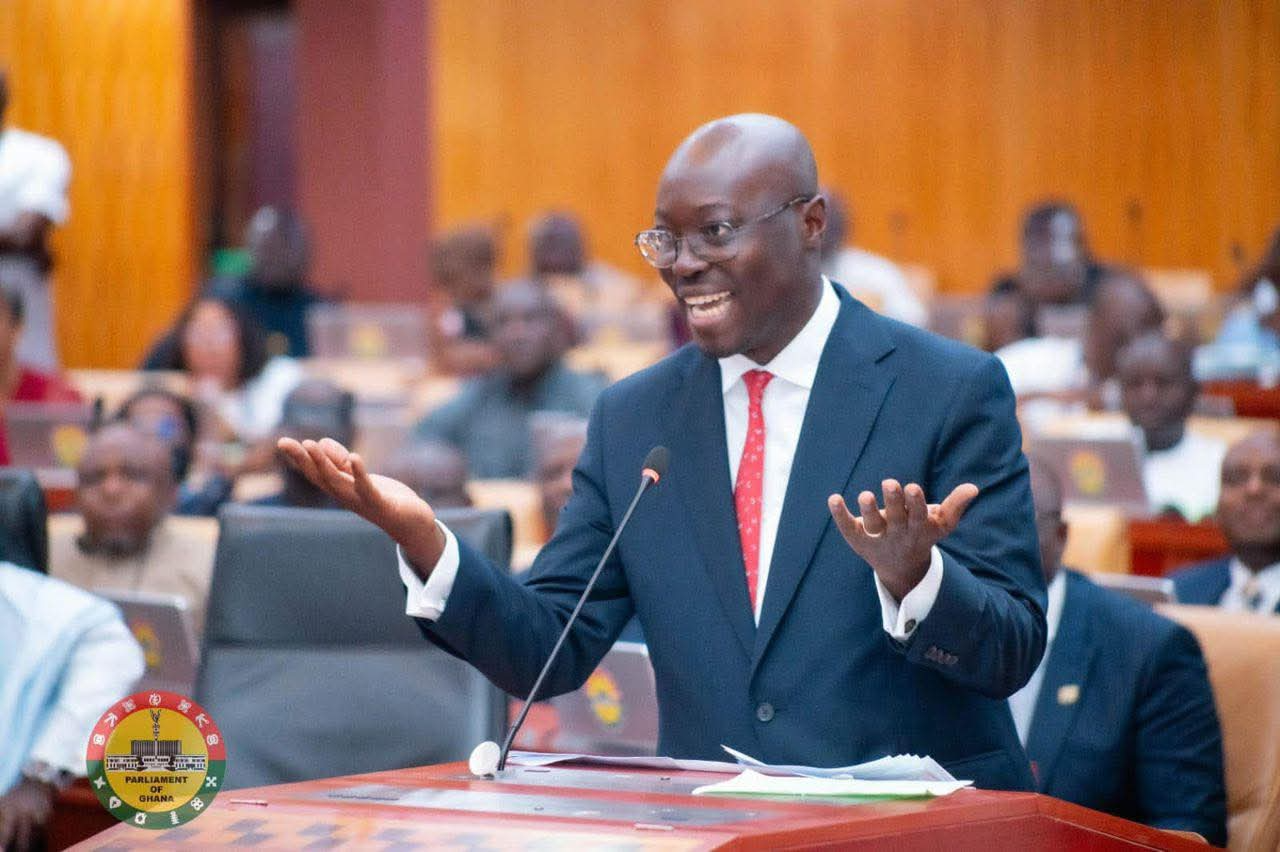
Addressing Parliament on Wednesday, February 25, Dr Forson presented a detailed cost-benefit analysis of reserve accumulation efforts between 2017 and 2024, contrasting them with what he described as a more cost-effective approach in 2025.
He told the House that over the past eight years, the Bank of Ghana relied heavily on swaps, sale and buy-backs (SBBs), and other short-term facilities to shore up the country’s reserves, describing the strategy as expensive.
According to him, in 2022, 2023 and 2024, the central bank accumulated reserves of about US$3 billion, US$2 billion and US$650 million respectively through swaps and SBBs, at interest costs of US$615 million, US$476 million and US$67 million.
In those three years alone, from 2022 to 2024, the Bank of Ghana accumulated US$5.65 billion from swaps and sale and buy-backs at a cost of US$1.16 billion in interest payments only,” he said.
Dr Forson further disclosed that between 2018 and 2021, the central bank borrowed US$2 billion from international commercial banks, including JPMorgan Chase, Standard Chartered and Citibank, at a cost of US$182 million.
He also referenced a US$2.25 billion bond issuance in 2017 involving Franklin Templeton to support reserve build-up, noting that the inflow cost the nation about GH¢7.3 billion in interest payments between 2017 and 2022.
Between 2018 and 2021, government borrowed approximately US$11.025 billion from the Eurobond market at interest rates ranging between 7.6 per cent and 9.6 per cent per annum to bolster reserves. The Minister said these Eurobond issuances alone cost Ghana about US$2.5 billion in interest payments from 2018 to 2022.
He added that Ghana is still servicing these debts following the 2022 debt default, with US$1.5 billion due to Eurobond holders in 2026 alone.
At the height of the 2022 economic crisis, when Ghana lost access to the international capital market, government again resorted to borrowing €200 million, US$196.58 million and US$350 million from the African Export-Import Bank at rates of 6.49 per cent, 9.55 per cent and 9.33 per cent respectively to support reserves.
Dr Forson argued that despite these substantial borrowings between 2017 and 2022, the measures were insufficient to stabilise the cedi, resulting in significant depreciation and depletion of reserves.
“It is obvious that borrowing to support reserves accumulation is unsustainable and leads to high debt distress and debt overhang,” he stated.
He revealed that between 2017 and 2024, the Bank of Ghana and the Ministry of Finance collectively borrowed US$21.7 billion to support reserve build-up at an interest cost of US$3.84 billion, in addition to the GH¢7.3 billion paid in interest to Franklin Templeton.
In contrast, the Finance Minister highlighted the role of the Ghana Gold Board, which he said brought in about US$10 billion in foreign exchange in 2025 at a cost of US$214 million to support reserve accumulation.
He argued that if government had borrowed the same US$10 billion at a yield of 8 per cent in 2025, the country would have paid about US$800 million in interest in just one year.
Dr Forson concluded that the cost of accumulating reserves through the Ghana Gold Board in 2025 was significantly lower than the costs incurred through the Bank of Ghana’s swaps and sale and buy-back arrangements in 2022 and 2023, describing the new approach under GANRAP as a more sustainable path for strengthening Ghana’s external buffers.