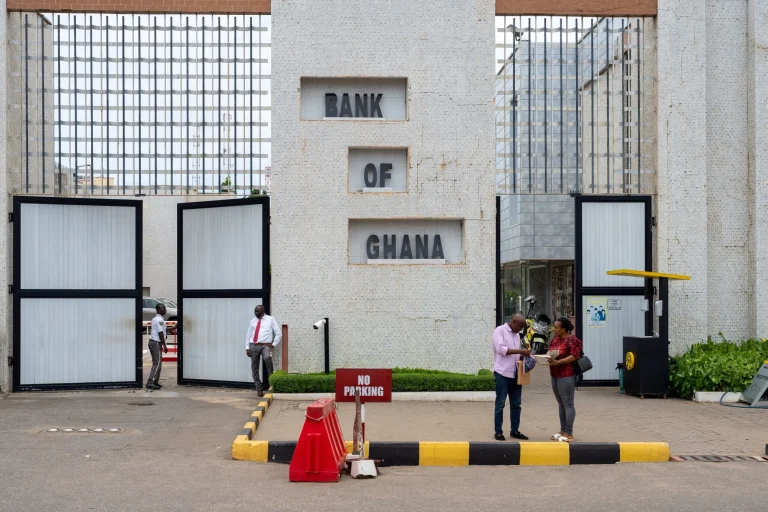


The Bank of Ghana (BoG) will begin circulating its upgraded Ghana Cedi Heritage Series banknotes on December 1, 2026, while the existing banknotes will continue to remain legal tender.
BoG Governor, Dr Johnson Pandit Asiama, said the redesigned notes feature enhanced security measures, improved durability and more compact sizes to strengthen protection against counterfeiting and make everyday transactions more convenient.
Speaking at the launch of the Heritage Series at Bank Square in Accra on Thursday, November 12, 2026, Dr Asiama said the initiative was aimed at strengthening public confidence in the national currency while reflecting Ghana’s rich history and cultural identity.
“The Heritage Series will be introduced into circulation from December 1, 2026, and will circulate alongside the existing series, which remains legal tender. This approach will allow the public and businesses to adjust smoothly to the Heritage banknotes without unnecessary disruption to economic activity. The Bank remains committed to a well-managed transition that supports continuity in payments and reinforces confidence in the cedi” he said.
The redesigned banknotes incorporate images of national heroes, historic landmarks, monuments and Adinkra symbols, showcasing Ghana’s cultural identity and historical heritage through everyday currency use.
Dr Asiama said the enhanced security features would make the notes harder to counterfeit while enabling the public to distinguish genuine banknotes from fake ones more easily.
He further explained that the improved durability was intended to help the notes withstand frequent handling and the country’s climatic conditions, thereby extending their lifespan in circulation.
Dr Asiama emphasised that the rollout of the Heritage Series would not lead to the immediate withdrawal of existing banknotes, noting that both versions would remain in circulation concurrently.
New Currency Legislation
Dr Asiama also revealed that the Bank of Ghana was collaborating with relevant stakeholders to develop a new Currency Act to replace the existing Currency Act, 1964 (Act 242), which has regulated the country’s currency for several decades.
The proposed law is expected to introduce tougher penalties for counterfeiting and provide clearer guidelines for the detection, surrender, authentication and destruction of counterfeit banknotes.
The proposed legislation will also strengthen the legal framework for tackling the mutilation, defacement and improper handling of banknotes and coins.
Dr Asiama further disclosed that the Bank had developed an Enterprise Currency Operations Management Software (ECOMS) in-house to enhance coordination between the central bank and commercial banks in managing currency operations.
He added that the Bank planned to establish additional Cash Centres at its regional offices in Ho and Tamale to improve access to currency services and bring them closer to the public.
Cedi App
As part of measures to promote public awareness of the redesigned currency, Dr Asiama announced the introduction of a Cedi App to provide information on the features of the Heritage Series and support users with visual impairments.
He added that the Bank would roll out a nationwide public education campaign in major local languages to equip Ghanaians with the knowledge to identify genuine banknotes and ensure their proper handling.
Dr Asiama emphasised that despite the growing adoption of digital payment systems, physical cash remained vital to Ghana’s monetary resilience, particularly during technical failures, cyberattacks and other disruptions to electronic payment platforms.
He reaffirmed the Bank’s commitment to upgrading the country’s payment infrastructure while ensuring that physical currency remained readily available, accessible and reliable.
The introduction of the Heritage Series forms part of the Bank of Ghana’s broader currency modernisation agenda and efforts to strengthen public confidence in the cedi, ahead of the central bank’s 70th anniversary