
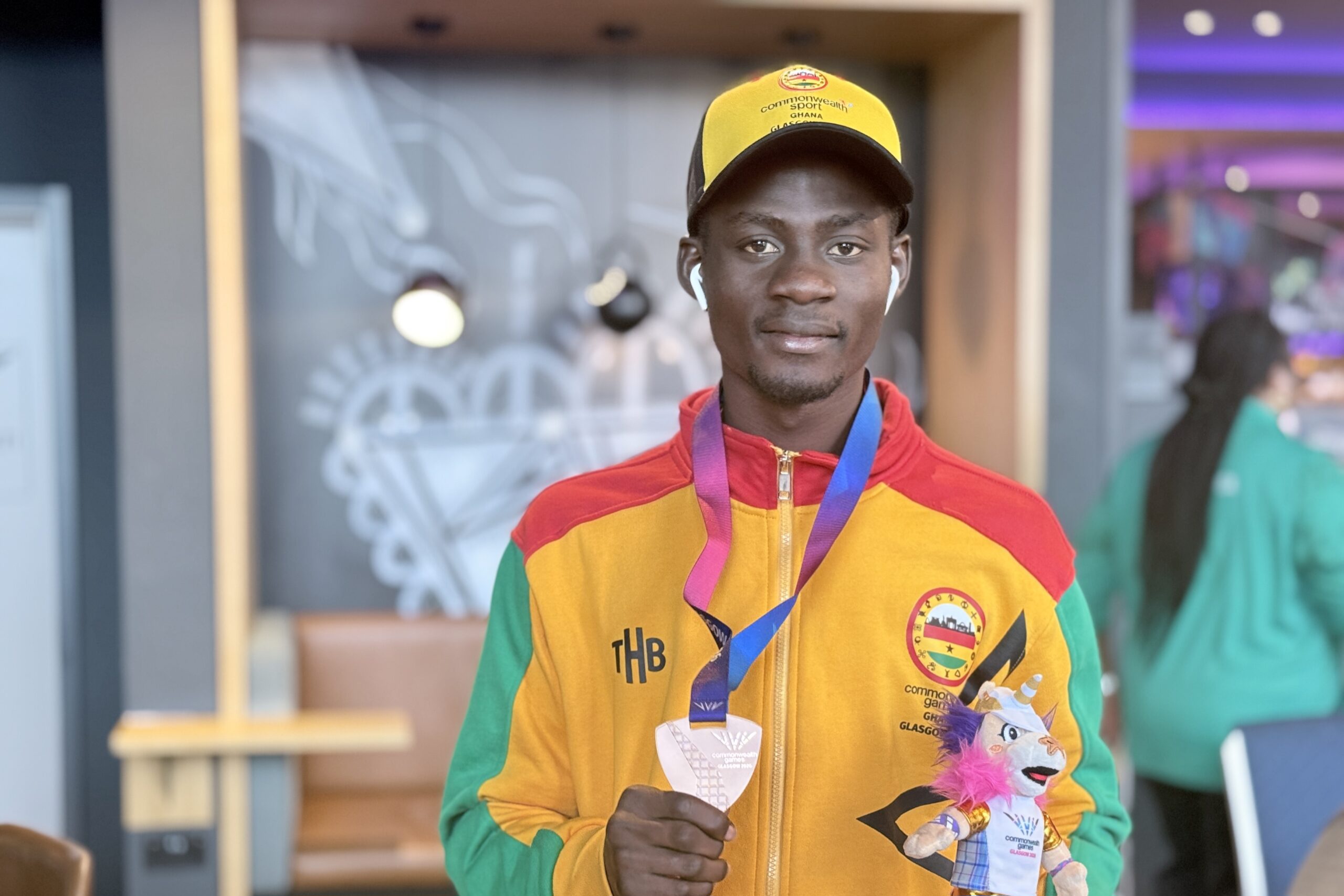
Amadu Mohammed has given Ghana its lone boxing medal at the Glasgow 2026 Commonwealth Games, fighting his way to bronze in the men’s 55kg bantamweight division after a hard-fought split-decision loss in the semi-finals. The 21-year-old from Mamprobi lost 4-1 to Australia’s Jye Dixon on Thursday, July 30, 2026, at Glasgow’s SEC Hall 5, but under Commonwealth Games rules both beaten semi-finalists take home a medal, sealing his place on the podium.
It is a significant result for the Black Bombers, whose 10-strong squad travelled to Scotland chasing a repeat of Ghana’s three-medal haul from Birmingham 2022. In the end, only Mohammed made it past the quarter-finals, closing a campaign marked by flashes of promise, one serious injury and, by the boxing team’s own admission, some uncomfortable logistical struggles behind the scenes.
A Bronze Built Bout by Bout
Mohammed, the reigning 2023 African Games champion and Ghana’s assistant team captain in Glasgow, opened his campaign against Kiribati’s Eriu Temakau in the round of 16 and won by stoppage inside the opening round, sending an early statement of intent.
He followed that with a tighter, more tactical performance in the quarter-finals against England’s Ellis Trowbridge, edging a 4-1 split decision to book his semi-final slot and, with it, a guaranteed medal. Speaking after that win, Mohammed kept his focus on the bigger prize.
“My message to Ghanaians is to keep praying for us. We are not done yet — we reached the medal zone, but the ultimate goal is gold.”
The Semi-Final Against Jye Dixon
The semi-final against Dixon swung on fine margins. Mohammed took the opening round convincingly, with all five judges scoring it 10-9 in his favour. The Australian responded in round two, taking four of the five scorecards, before sweeping the third round unanimously to seal the bout and his own place in the gold-medal fight.
Mohammed rallied late, landing clean combinations in the closing exchanges, but it was not enough to overturn the deficit on the cards. He did not hide his disappointment afterward.
“The best, I don’t have anything to say but I’m not happy, this is not what I expect. I beg every Ghanaian… that they shouldn’t give up. Keep supporting. With all my weakness, I do my best that I can do.”
He also pointed to the work ahead with his corner, referencing his coaches by name as he looks to sharpen the parts of his game that cost him a final appearance.
The Rest of the Black Bombers’ Campaign
Mohammed’s bronze was the high point of an otherwise mixed outing for Ghana’s boxers in Glasgow. Squad captain Abdul Wahid Omar, a two-time Commonwealth Games bronze medallist competing at 65kg, suffered an early exit, losing his round-of-32 bout to England’s Patris Mughalzai. Women’s 54kg fighter Nancy Bamfo also went out in the round of 16, beaten on the cards by Northern Ireland’s Nicole Clyde.
Desmond Pappoe’s Injury Heartbreak
The most painful setback belonged to 19-year-old light heavyweight Desmond Pappoe. Fighting at 80kg, he won a gritty 3-2 split decision over Tonga’s Josh Tonga in the round of 16 to reach the last eight. But he was forced to withdraw from his quarter-final against Canada’s Joshua Ofori after scans confirmed a severe shoulder injury, ending his Games on medical advice before he could test himself for a medal.
Muntari, Nettey and Plange Fall at the Quarter-Final Wall
Heavyweight Jibril Muntari and light middleweight Precious Akai Nettey both received opening-round byes before advancing to the quarter-finals, where they were eliminated by higher-seeded opponents. Super-heavyweight Daniel Plange reached the same stage before also bowing out. Between them, five of Ghana’s ten boxers made it to at least the quarter-finals, a spread head coach Dr Ofori Asare had hoped would translate into a bigger medal count after setting a pre-tournament target of seven medals.
Equipment Troubles Behind the Scenes
Coach Asare later revealed that logistical shortfalls dogged the team throughout the tournament, including a shortage of kits that forced three boxers to share a single set between them. In one bout, he said, a boxer’s shorts began slipping during the fight and the referee threatened disqualification before Asare improvised a fix with tape from ringside.
The issues drew a response from the National Sports Authority. Director-General Yaw Ampofo Ankrah met with the Black Bombers and the Black Hitters boxing squads after the Games to hear directly from athletes and coaches about what had gone wrong.
“We have failed you in certain aspects, and we must accept and admit it, and make sure it never happens again.”
Ankrah said the authority would compile a full report on the difficulties the team faced in Glasgow to guide preparations for future international tournaments.
Ending a Long Wait, Chasing a Longer One
Mohammed’s medal also revives conversation around Ghana’s Commonwealth Games boxing history. The country has not produced a Commonwealth Games boxing gold medallist since Ray Narh topped the podium in 1998, a gap of nearly three decades that Mohammed’s run in Glasgow, while falling short of gold, has put back in the spotlight.
Back home, the bronze has already been celebrated as a marker of progress for a programme that produced Abdul Wahid Omar’s two Commonwealth medals in previous cycles and is now looking to Mohammed, still only 21, to lead the next generation. Full details of his semi-final and the wider Black Bombers campaign were also documented by BoxingHana, Ghana’s dedicated boxing news platform.
What Comes Next
For now, attention turns to how the Ghana Boxing Federation and the National Sports Authority respond to the equipment and preparation concerns raised by Coach Asare, and whether the promised review changes how future squads are resourced. For Mohammed, the target he set for himself after his quarter-final win remains unchanged: the medal zone was the floor, not the ceiling, and gold is still the goal he is chasing.