
If you have ever designed a flyer for your church programme, a birthday post or a small business logo on your phone, there is a good chance you used Canva. So when the company announced a major shake-up affecting 22 percent of its workers this week, the news reached far beyond Australia. The Canva job cuts raise a question many young Ghanaians are already asking: if AI is shaking up even the design tools, what skills are still worth learning?
Let’s look at what actually happened first, because a story like this can quickly get exaggerated online.
What we know about the Canva job cuts
According to Citi Newsroom’s report, co-founder and CEO Melanie Perkins told staff that 1,271 people would be affected. Not all of them are losing their jobs. Some will be asked to relocate or change roles, while others will leave.
The company has staff in 37 countries and says Sydney will become the main base for more of its product teams. Perkins told staff that “our growth has slowed for the first time in a decade”.
The report adds that Canva’s value has reportedly fallen over concerns about AI’s effect on its business and the cost of building AI into its products. Two of its backers reportedly downgraded their valuation from A$60 billion to about A$49 billion.
What this story does not say
It would be easy to turn this into “AI has killed design”. The evidence does not support that.
- Canva did not say, in the reported statement, that AI replaced those workers.
- The reported pressure comes from slower growth, high AI costs and changing customer expectations.
- One company’s restructuring does not tell us how many design jobs exist in Accra or Kumasi.
What it does show is that even a very successful software company is being forced to reorganise quickly. Perkins said new technology is changing what people can create and how they create it. For anyone building a career in creative work, that is the part to think about.
The opinion part: where the value is moving
This section is our analysis, not reported fact.
When tools make something easy, that thing becomes cheaper. A clean flyer used to take skill. Today, a template and an AI prompt can produce a decent one in minutes. So competing only on “I can make a flyer” is getting harder.
What is harder to automate is judgement and storytelling. Knowing what a client’s customers respond to. Writing an idea that makes people stop scrolling. Getting a character to move in a way that feels alive. These skills sit on top of the tools, and they tend to stay useful when one tool is replaced by another.
Some practical ways to read that:
- Learn principles as well as buttons. Layout, colour, timing and storytelling carry over from one app to the next.
- Use AI as an assistant. Treat its output as a first draft that still needs your eye.
- Add motion or video. Moving content is everywhere on social media, so a designer who can also animate has more to offer.
- Build a small portfolio. Three real projects tell a client more than a long list of apps.
Ghana is betting on digital skills too
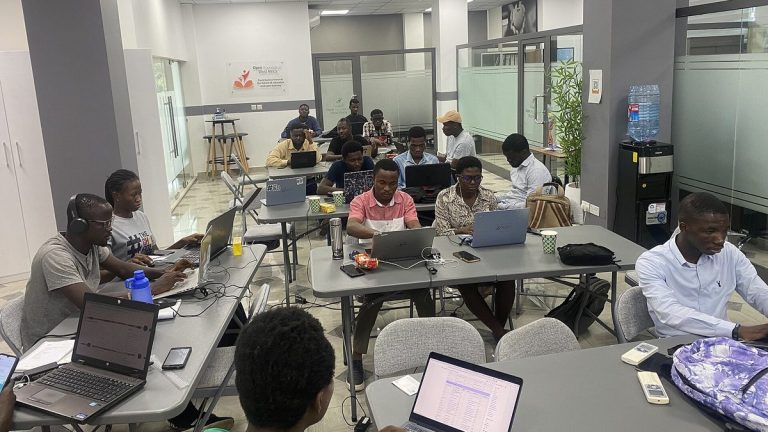
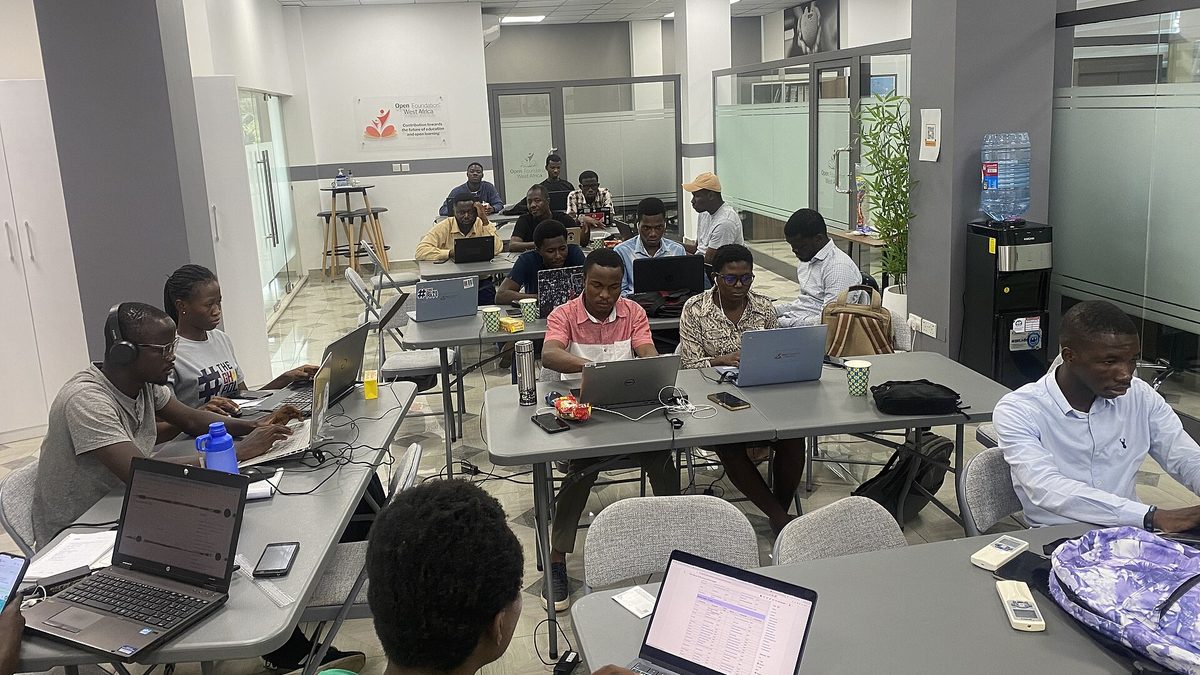
You do not have to work out this shift alone. The government launched the One Million Coders Programme to give Ghanaians skills in coding, AI, cybersecurity and data analytics. In July it handed the University of Ghana another 2,000 laptops for the programme, taking its total there to 2,500.
Telecel has also signed on to offer free access to its Startocode platform, aiming to train 100,000 young Ghanaians over four years. And the national AI strategy for 2025 to 2035 commits to training more than one million AI-ready young people, as an analysis on MyJoyOnline sets out.
Whether those programmes lead to real jobs is another question, and one worth asking when the 2027 Budget is presented. Training is only the first step.
Two policy details creatives often miss
- Your foreign earnings have a clear status. The Bank of Ghana said in April that payouts from digital platforms are service export proceeds, which can go into foreign exchange accounts at Ghanaian banks or into cedi accounts, subject to the rules.
- Young creative business owners may qualify for relief. The Ghana Revenue Authority said in 2025 that creative businesses owned by people under 35 can benefit from a five-year tax holiday. Confirm with the GRA whether you qualify. The same authority has been clear that creatives are expected to meet their tax obligations.
The bottom line
The Canva story is not a reason to give up on creative work. It is a reminder that no single app or company is a career plan. Tools will change again, probably sooner than we expect. The people who keep learning, and who can explain why their work helps a client, will be in a better place to change with them.
Are you a designer, editor or animator in Ghana? Has AI brought you more work or less? We would really like to hear your experience in the comments.
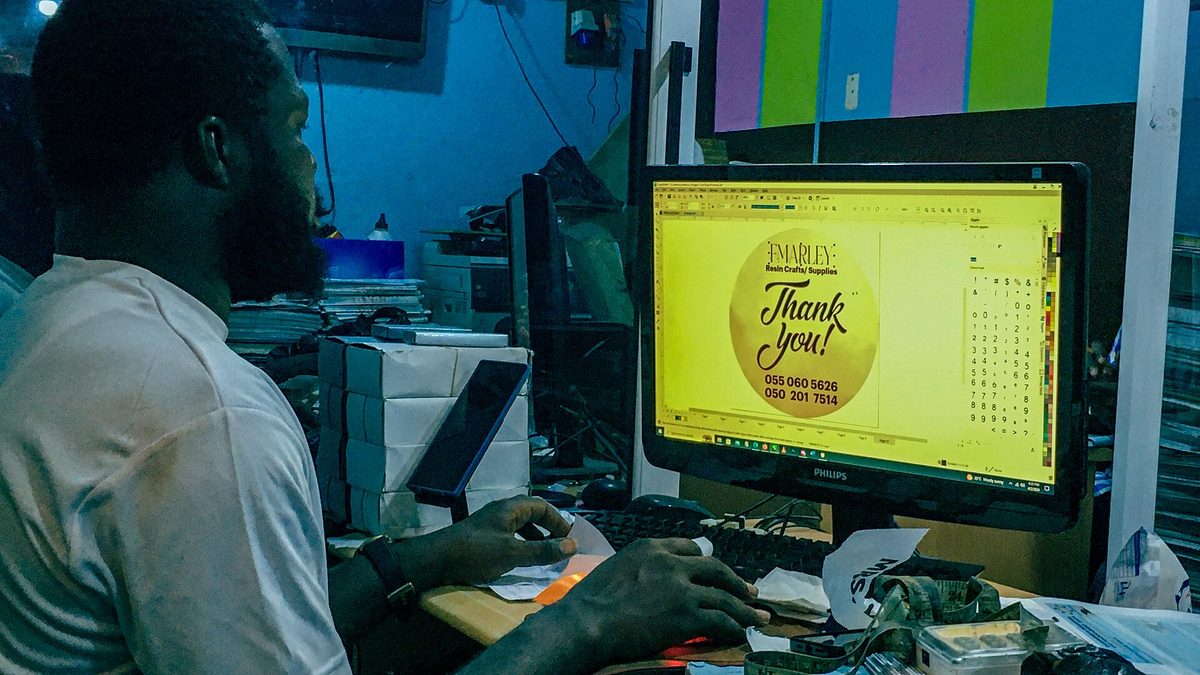
Featured image: A Ghanaian graphic designer at work, photographed in 2024. Photo: Amuzujoe, CC BY-SA 4.0, via Wikimedia Commons (cropped).