
Picture this. You land in Accra after a work trip to Nairobi, and before you reach your family at arrivals, a Port Health officer checks your temperature and goes through your travel history. That is the new reality of Ebola screening in Ghana, and it applies to more people than many travellers realise.
Let’s start with the fact that matters most: Ghana has not recorded a single confirmed Ebola case. The Ministry of Health says the measures it announced on Tuesday, November 3 are precautionary. Still, the outbreak they respond to is serious, so it is worth knowing exactly what the rules say.
What Ebola screening in Ghana looks like at the airport
According to the ministry’s statement, reported by Citi Newsroom, there are two layers. One covers everybody. The other covers people coming from countries with ongoing transmission.
For every arriving passenger
- Port Health officers carry out temperature checks.
- Officers review your health declaration form and your travel history.
- You must disclose any visit to, or transit through, an affected country in the past 21 days.
- You must also disclose contact with a suspected or confirmed case.
That transit point is easy to miss. A connection through an affected country counts, even if you never left the airport there.
For passengers from countries with ongoing transmission
These travellers will be monitored for up to 21 days. The Ghana Health Service will contact them for follow-up. In the ministry’s words, they “must keep reachable contact details and report any symptoms immediately”.
In practice, give a phone number you actually answer. A number you stopped using last year helps nobody and could put you on the wrong side of the rules.
What happens if you have symptoms
Passengers with fever, vomiting, diarrhoea, severe weakness or unexplained bleeding will be referred for further assessment. Where necessary, that can include temporary isolation and medical attention.
The ministry has also warned that giving false information, hiding symptoms or refusing to cooperate could attract public health measures under Ghanaian law. The statement, as reported, does not spell out specific penalties.
Hotels and conference venues have a role too. They have been directed to report guests from affected countries to the nearest district health directorate and to keep those guests’ contact details. If you run a guest house in Accra, Kumasi or Takoradi, this one is for you as well.
Why Ghana moved now
The current outbreak is caused by the Bundibugyo strain. The DRC declared it in mid-May, and it has become that country’s largest Ebola outbreak on record.
Africa CDC figures reported this week show:
- 5,376 deaths, almost all of them in the DRC
- 10,444 infections across the DRC, Uganda and Kenya
- a death rate above 50 percent
- no approved treatment or vaccine for this strain, although clinical trials of the Ervebo vaccine have started
Kenya recorded its first ever Ebola cases in October. Nigeria’s Federal Capital Territory also reported an imported case that month, with no deaths recorded. Uganda, which had 20 cases, was declared Ebola-free in August.
For Ghana, the Kenya link matters. In its October 21 statement to the Ghana News Agency, the ministry pointed to direct flights and higher passenger volumes between the two countries. It also flagged frequent travel between Ghana and Nigeria. Simulation exercises have already been held at the Accra International Airport and the Ghana Infectious Disease Centre.
The facts that should calm the panic
Rumours travel faster than any virus, especially in WhatsApp groups. Here is what health authorities have actually said.
- It is not airborne. The WHO, as cited in the ministry’s briefing, says Ebola spreads through direct contact with the blood or body fluids of an infected person, or with contaminated materials.
- Symptoms can take time. They typically appear 2 to 21 days after exposure, with an average of 8 to 10 days. That is why monitoring runs for 21 days.
- Early signs look ordinary. High fever, severe headache, extreme fatigue, sore throat and chills can come first. Unexplained bleeding and confusion may follow.
Those early symptoms overlap with many everyday illnesses, including malaria. A fever on its own does not mean Ebola. What makes the difference is recent travel to an affected area or contact with a suspected or confirmed case.
What you should do
- If you are travelling: fill in your declaration form honestly and list any transit stops.
- If you feel unwell after travel: seek medical care promptly and tell health workers where you have been.
- If you care for someone who is sick: practise good hand hygiene and avoid contact with anyone who has unexplained fever, vomiting, diarrhoea or bleeding, until they have been assessed.
- Before you forward that message: check it. The ministry has asked the public to rely on official channels and avoid spreading unverified reports. In July, it had to correct a foreign broadcaster’s report that wrongly suggested Ghana had recorded a case.
What we still don’t know
The published reports do not list which countries the ministry currently treats as having ongoing transmission, or how checks will work at land borders under this latest statement. We will update readers when that detail becomes available. Meanwhile, you can read about other pressures on Ghana’s health system in our report on the NHIA’s warning to staff over fraud and in our look at what new HIV data is telling Ghanaians.
Preparedness is cheaper than panic
Ghana has no confirmed case, and that is exactly when preparation counts. These checks only work if travellers, hotel owners and health workers treat them seriously, and if the public keeps a cool head.
Have you flown into Accra recently? Did you go through the new checks, and how did they go? Tell us in the comments, and share this with anyone travelling soon.
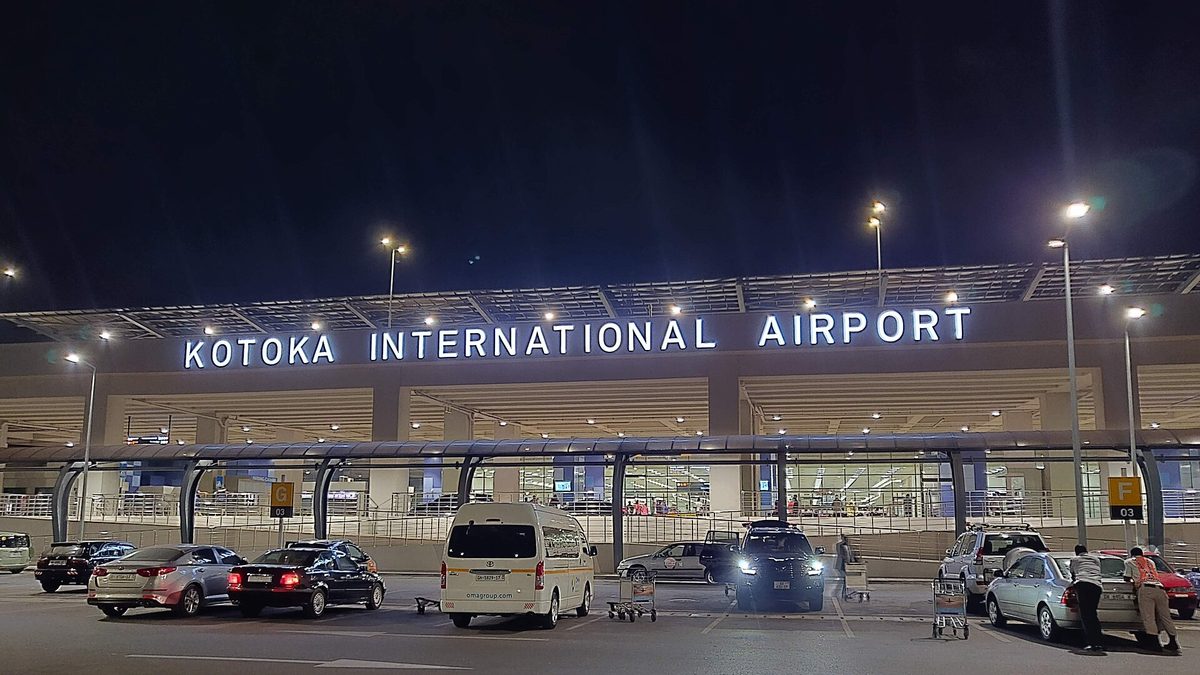
Featured image: The terminal at Kotoka International Airport, now known as Accra International Airport, photographed in 2019. Photo: Sm105, CC BY-SA 4.0, via Wikimedia Commons (cropped).