

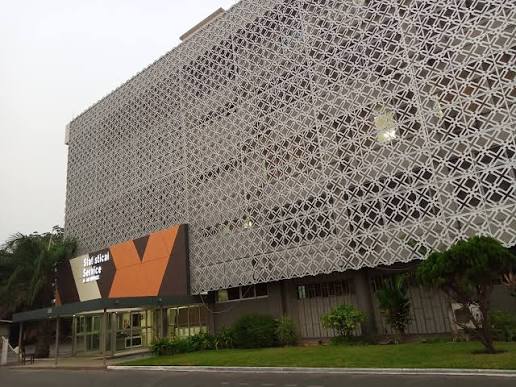
Ghana’s economy expanded by 6.0% in the second quarter of 2026, bringing the overall growth rate for the first half of the year to 6.2%, according to the Ghana Statistical Service (GSS).
The latest quarterly growth represents a marginal slowdown from the 6.1% recorded in the second quarter of 2025.
Non-oil GDP also remained resilient, recording a growth rate of 5.4% in the second quarter, while non-oil growth for the first half of 2026 stood at 5.9%.
The latest figures indicate that economic growth continues to be supported largely by the services sector, particularly information and communications technology (ICT), as well as growth in oil and gas production and investment.
Services sector drives growth
The services sector recorded an 8.0% growth rate in the second quarter, contributing 57.6% of the overall GDP growth during the period.
Information and communications technology (ICT) emerged as the strongest-performing activity within the sector, growing by 30.9% and accounting for 41.5% of total GDP growth in the quarter.
The figures highlight the increasing importance of the services sector, particularly digital activities, in driving Ghana’s economic expansion.
Oil and gas support industrial growth
The industrial sector grew by 4.3% in the second quarter, supported in part by a strong recovery in oil and gas production.
Oil and gas activity recorded a 21.4% growth rate during the period, contributing to the overall performance of the industrial sector.
However, industrial growth remained more moderate than the services sector, suggesting that economic expansion was uneven across the various productive sectors.
Agriculture records modest growth
The agriculture sector recorded a 3.9% growth rate in the second quarter, making it one of the slower-growing broad sectors during the period.
The sector’s performance was affected by a sharp decline in fishing activity, which contracted by 24.7% during the quarter.
The relatively modest growth in agriculture contrasts with the stronger performance of the services sector, particularly ICT.
Investment and domestic demand strengthen
Investment recorded a significant increase of 53.0% in the second quarter, while domestic demand also expanded by 11.2%.
On a quarter-on-quarter basis, seasonally adjusted real GDP grew by 1.4%, indicating continued expansion in economic activity during the period.
The latest figures suggest that Ghana’s economy maintained its growth momentum, although the expansion remained concentrated in selected sectors and economic activities.
Investment and domestic demand strengthen growth
Investment increased significantly by 53.0% in the second quarter, while domestic demand also recorded strong growth of 11.2%.
On a quarter-on-quarter basis, seasonally adjusted real GDP grew by 1.4%, pointing to continued expansion in economic activity during the period.
With first-half GDP growth reaching 6.2% and non-oil growth standing at 5.9%, the figures indicate continued resilience in Ghana’s economy. However, ensuring that growth is more evenly distributed across productive sectors and translates into improved employment and household incomes remains an important policy challenge.