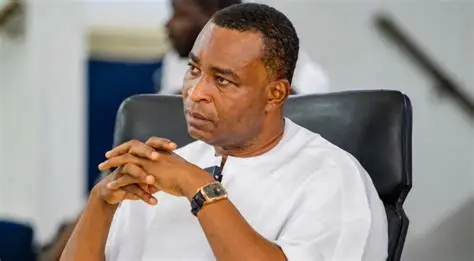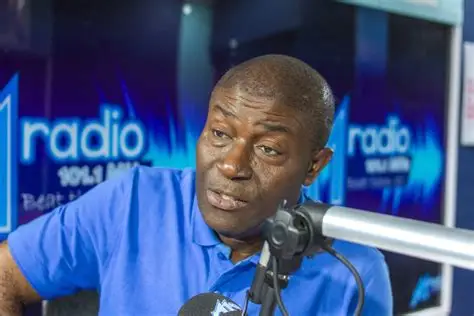

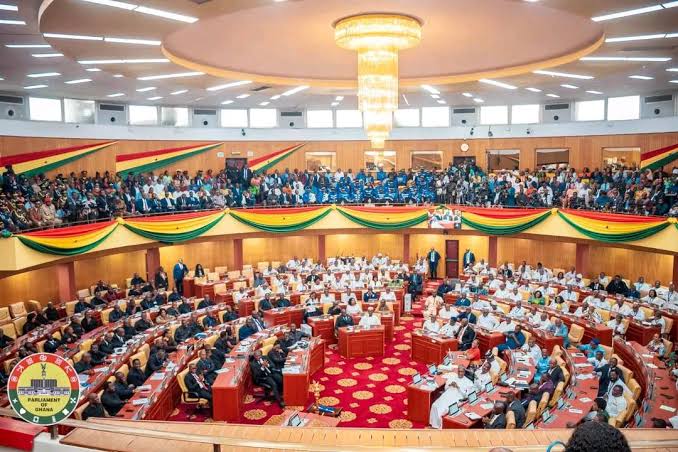
Ghana’s government has accepted a recommendation to cap the size of Parliament at 300 seats, up from the current 276, as part of a broader package of constitutional reforms endorsed following the work of the Constitution Review Committee. Attorney-General and Minister for Justice Dr Dominic Ayine announced the government’s position at a press briefing in Accra on July 30, 2026, describing the cap as a way to control the cost of the legislature while widening access to groups historically underrepresented in it.
Background on the Constitution Review Committee
The Constitution Review Committee, commonly referred to as the CRC, was set up to examine long-standing calls for changes to Ghana’s 1992 Constitution, including how Parliament is structured, how the executive is composed, and how district assemblies are run. Its recommendations touch on issues that have been debated in Ghanaian public life for years, from the ballooning cost of running a legislature that has grown steadily since the Fourth Republic began, to complaints that certain groups rarely make it into the House through the current constituency-based system.
Since 1992, the number of parliamentary seats has expanded in stages, from 200 to the current 276, largely through the creation of new constituencies ahead of successive elections. That gradual growth is part of what the CRC was asked to examine, alongside questions about the size of the executive and the method for choosing local government leaders.
What the government has accepted
According to Dr Ayine, government will not simply add more constituency seats to reach 300. Instead, the plan keeps the existing 276 constituency-based seats intact and adds 24 additional seats to be filled through a form of proportional representation reserved specifically for women, persons with disabilities and young people.
Dr Ayine explained the thinking behind the approach, saying: “Capping Parliament saves cost and the reserve element opens the doors of our legislature wider to those that our politics have historically kept outside.”
Government has indicated that an independent study will be commissioned to work out the detailed mechanics of how the 24 reserved seats would be allocated, since the CRC’s recommendation set the principle but left the design of the proportional representation formula to be worked out separately.
The Parliament cap was announced alongside several other constitutional changes government says it has accepted from the CRC’s recommendations. These include extending the presidential term from four to five years, moving to a system where Metropolitan, Municipal and District Chief Executives (MMDCEs) are directly elected rather than appointed, and capping the number of government ministers at 60. Other accepted proposals reported alongside the Parliament cap include lowering the minimum age for a presidential candidate from 40 to 35, abolishing the death penalty, allowing dual citizens to serve in Parliament and other high offices, and removing the president’s tax exemption.
Reactions to the proposal
The proposed expansion to 300 seats has drawn mixed reaction, particularly from commentators who question whether a bigger Parliament translates into better representation. Political analyst Samuel Boateng, for instance, has argued publicly that the plan to grow Parliament is unnecessary, contending that the steady rise in MP numbers over the years has not produced correspondingly better outcomes for constituents. He has suggested that seats should instead be reduced, and separately criticised the proposed cap of 60 ministers as too high, arguing for a smaller executive.
Supporters of the reserved-seats approach, on the other hand, see it as a targeted way to address a persistent gap in Ghanaian politics, where women, persons with disabilities and young aspirants have historically struggled to win constituency-based seats regardless of how the boundaries are drawn. Whether the 24 additional seats achieve that aim will depend heavily on the design of the proportional representation formula that is still to be worked out.
What happens next
Accepting a CRC recommendation is only the first step in a longer constitutional process. Because some of the proposed changes touch entrenched provisions of the 1992 Constitution, they cannot take effect through an ordinary Act of Parliament alone. Reports on the government’s broader reform package indicate that two separate constitutional amendment bills are being prepared, one requiring approval by a two-thirds majority in Parliament and another requiring approval through a national referendum, with both expected to be ready by October 2026.
A referendum on the entrenched provisions is reportedly being planned to coincide with the 2027 District Assembly elections, a timing choice intended to reduce the cost of holding a separate national vote. President John Dramani Mahama is also expected to set up a Constitutional Review Implementation Committee to oversee the process of turning the accepted recommendations into law.
Until Parliament debates and passes the relevant bills, and until any provisions requiring a referendum are put to Ghanaian voters, the current 276-seat Parliament remains in place. The coming months, including how the promised independent study on the reserved seats is conducted and how the two amendment bills are drafted, will show how much of the CRC’s vision for a 300-seat Parliament survives the formal amendment process.