
President John Dramani Mahama has sworn in three new Justices of the Supreme Court, charging them to uphold the Constitution, safeguard judicial independence and ensure their decisions strengthen public confidence in Ghana’s justice system.
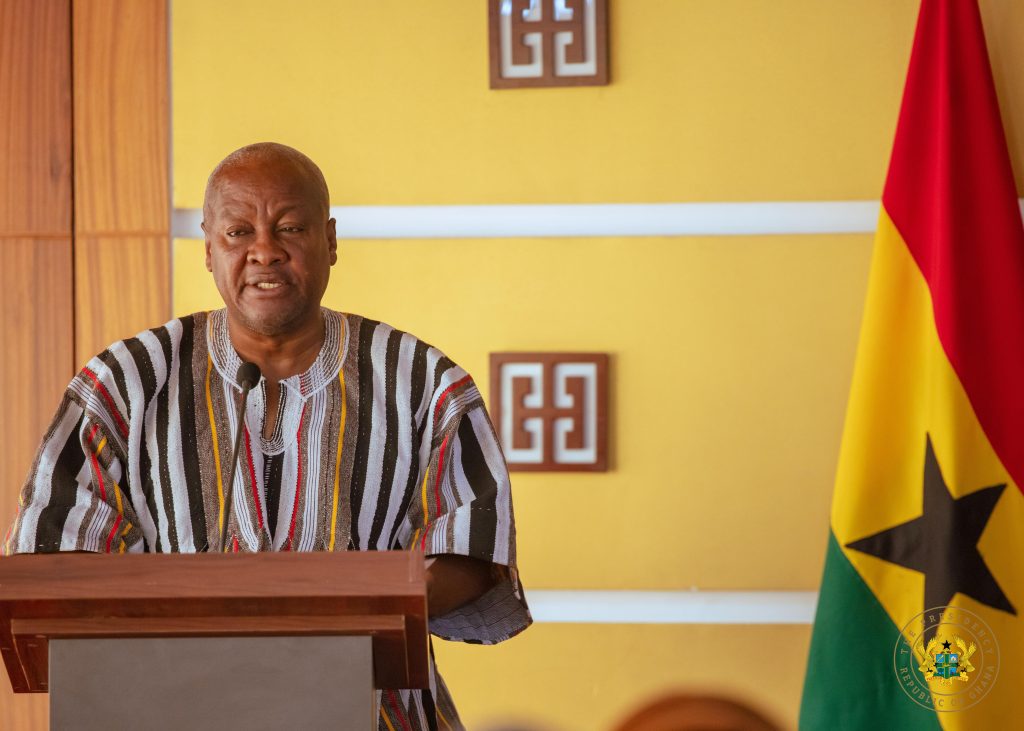
Speaking at the swearing-in ceremony at the Jubilee House on Thursday, September 10, President Mahama congratulated Justice Sophia Rosetta Oduokouan Bernasko-Essah, Justice Edward Amoako Asante and private legal practitioner Anthony Fawson Jnr following Parliament’s approval of their appointments.
He described service on the Supreme Court as one of the highest and most demanding responsibilities in Ghana’s constitutional democracy, stressing that the Court’s authority ultimately rests on the confidence and trust of the Ghanaian people.
“The authority of the Court does not come from force or political power. It rests on the confidence and trust of the people,” the President said, stressing that cases must be determined independently, impartially and strictly in accordance with the law.
President Mahama said the three new Justices bring a wealth of complementary experience that will further strengthen the country’s highest court.
Justice Bernasko-Essah, who previously served on the Court of Appeal, was commended for her extensive judicial experience and deep understanding of the administration of justice.
The President said her elevation reflected her competence, discipline and dedication, and urged her to contribute to the clarity, consistency and continued development of Ghanaian jurisprudence.
Justice Asante, meanwhile, was commended for combining extensive national judicial experience with regional expertise gained during his tenure as President of the ECOWAS Court of Justice.
According to President Mahama, his experience in areas including regional integration, treaty obligations, human rights and the relationship between domestic and international law would bring valuable perspectives to the Supreme Court.
Mr Fawson, who joins the bench from private legal practice and previously served as President of the Ghana Bar Association, was recognised for the extensive practical experience he brings from the legal profession.
President Mahama noted that his transition from legal advocacy to adjudication would require a significant shift in responsibility, with the judge expected to rise above competing interests and determine cases based on the law, evidence and the demands of justice.
President Mahama reaffirmed his commitment to judicial independence, stressing that it is not a privilege for judges but a safeguard for citizens whose rights depend on fair and impartial decisions, particularly in politically sensitive or challenging cases.
He, however, emphasised that judicial independence must go hand in hand with accountability, discipline and fidelity to the judicial oath.
“The oath you are taking today is consequential, not ceremonial,” he said, reminding the justices of their obligation to administer justice without fear, favour, affection or ill will, and to defend the Constitution.
He also called on the judiciary to address delays in the administration of justice, warning that prolonged cases, avoidable adjournments and delays in delivering judgments could undermine public confidence and amount to a denial of justice.
The President urged the judiciary to continue implementing reforms to improve the efficiency and accessibility of justice, including through the appropriate use of technology.
He said access to justice must be guaranteed for all Ghanaians, regardless of their income, social status or geographical location. Ultimately, he added, the effectiveness of the judicial system should be measured by how fairly, efficiently and promptly citizens are able to obtain justice.
President Mahama said the three new Justices had assumed office at a time when the Supreme Court continued to play a vital role in protecting constitutional rights, upholding the separation of powers and ensuring that no individual or institution is above the law.
He expressed confidence that their combined experience in the judiciary, regional institutions and private legal practice would enrich the Court’s deliberations and contribute to the continued development of Ghana’s legal and constitutional framework.