
The National Council of Parent-Teacher Associations (NCPTA) has called for a comprehensive technical review of the 2026 Basic Education Certificate Examination (BECE) assessment and results processing.
The Council wants the review to be conducted by qualified independent assessment experts in collaboration with relevant stakeholders.
According to the NCPTA, the exercise should scrutinise the marking and moderation processes, score processing, grade conversion and standardisation, as well as identify any unusual patterns or anomalies in the results.
It further called for an assessment of school-level performance patterns and the integrity and reliability of the electronic system used to process the results.
Objective
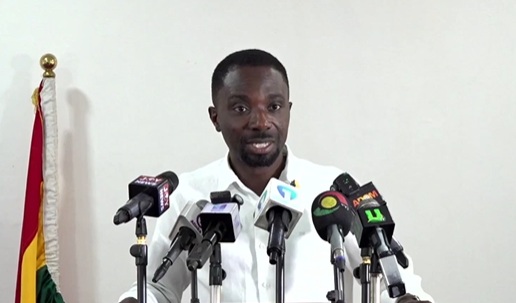
“Our objective is not to undermine WAEC, but to strengthen public confidence in the examination body,” the General Secretary of the NCPTA, Raphael Kofi Gapson, said at a press conference in Accra last Wednesday.
Grading System
He said the West African Examinations Council (WAEC) should provide a clear and accessible explanation of the grading system used to determine the 2026 BECE results.
According to him, parents and schools should be given a detailed breakdown of how raw marks are processed, how grades are derived, how standardisation is applied and how the final grades are determined.
He added that the explanation should include practical examples to clarify why mock examination or school-based percentages may not necessarily correspond directly with grades awarded in the final BECE.
“We are not demanding that a technical assessment methodology be changed without expert consideration.
We are demanding that the methodology be understood by the people whose children’s futures depend on it,” he said.
Investigations
Mr Gapson said investigations must be conducted within a reasonable and clearly communicated time frame.
On withheld results, he said where a candidate was cleared, the result should be released without unnecessary delay, and where an adverse decision was reached, the candidate and school should receive appropriate information on the decision and the available review or appeal process.
He called for a transparent mechanism through which candidates and authorised representatives could seek clarification of results, verification, script access where permissible, review or remarking where available, and the reconsideration of disputed administrative decisions.
“NCPTA calls for a dedicated complaints and clarification window involving the relevant assessment and placement authorities before the placement process becomes irreversible,” he said.
Chinese, Arabic
NCPTA welcomed the teaching of Chinese and Arabic as potential additions to the country’s educational opportunities and that both languages could have cultural, diplomatic, economic, and international relevance.
However, Mr Gapson said, “We recommend that their introduction be carefully structured, beginning with appropriate pilot programmes and qualified teachers.
Chinese and Arabic should complement rather than undermine the foundational importance of English, French, and Ghanaian languages. Our children must be globally competitive while remaining proudly Ghanaian.”
Indiscipline
Commenting on indiscipline in schools, he called for the strengthening of school disciplinary committees and said that “every junior high school (JHS) and senior high school (SHS) should have an effective disciplinary structure with clear procedures, parental involvement, documentation, and an opportunity for students to be heard.”
“Government should progressively provide adequate numbers of trained professional counsellors in JHS and SHS institutions, beginning with schools with high enrolment and significant behavioural challenges.
“Character education should become a deliberate component of the education system, covering integrity, responsibility, respect, patriotism, digital citizenship, work ethic, conflict resolution, drug abuse prevention, and responsible use of artificial intelligence,” he said, among other things.
Mr Gapson said chiefs, queenmothers, religious leaders, parents, and community leaders should be recognised as partners in character formation and not merely invited to schools for ceremonial occasions.
DISCLAIMER: The Views, Comments, Opinions, Contributions and Statements made by Readers and Contributors on this platform do not necessarily represent the views or policy of Accra Live.